The Boy and the Little Puffin
Aysel Banu YAVUZAL
- Category Children's Fairy Tales
- Format PDF
- Size 11.5 MB
- Views 1
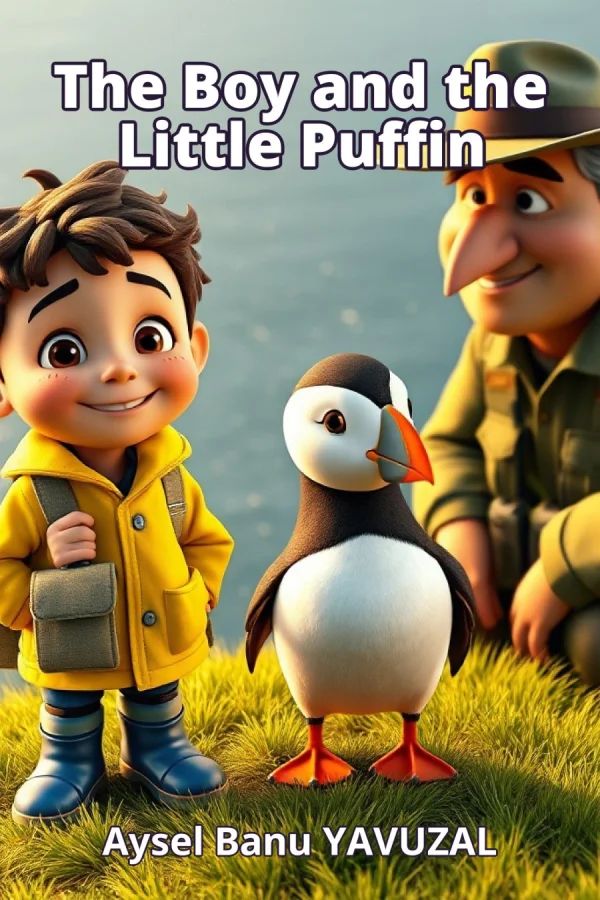
On a bright Saturday morning, a boy in a yellow raincoat and blue rubber boots visits a coastal seabird reserve with his class. There, a tall ranger in a green uniform introduces the children to the cliffs and the birds that nest there. The boy soon spots a small puffin waddling across the grass, carrying a blade of grass in its bright orange beak. The ranger explains that puffins dig burrows in the soft ground to build their nests, lay a single egg inside, and return to the same burrow every year. The boy is fascinated and follows the puffin, watching it work diligently to make its nest cozy.
When a group of visitors steps off the path and scares the puffins, the boy realizes how fragile the nesting areas are. He comes up with the idea to make cheerful signs telling people to stay on the paths and keep away from burrows. With the ranger's help, he places the signs along the path, and visitors begin to respect the rules. Later in the summer, the boy returns to see the little puffin with a tiny chick, and he knows his signs helped keep the puffin family safe. He continues to make more signs with his class.
This heartwarming story teaches children about the importance of protecting wildlife and their habitats. It shows how a simple idea and a willingness to help can make a real difference. The book is perfect for young readers who love animals and nature, and for parents and teachers looking for stories that inspire environmental awareness and responsibility.
Read the Book
If the PDF does not appear, open it in a new tab.
A Chapter from the Book
The Boy and the Little Puffin Aysel Banu YAVUZAL
On a bright Saturday morning, the boy pulled on his yellow raincoat and blue rubber boots. He was visiting the coastal reserve with his class. His satchel held pencils and paper for drawing. He hoped to see something exciting. The air smelled of salt and seaweed, and the waves crashed softly below the cliffs. The reserve was a special place full of seabirds. 1
A tall ranger in a green uniform and wide-brimmed hat met the children. She showed them a map and pointed to the cliffs. "This is a seabird reserve," she said. "Many birds come here to raise their chicks." The boy looked at the cliffs and wondered what birds lived there. The ranger smiled and led them along a path. 2
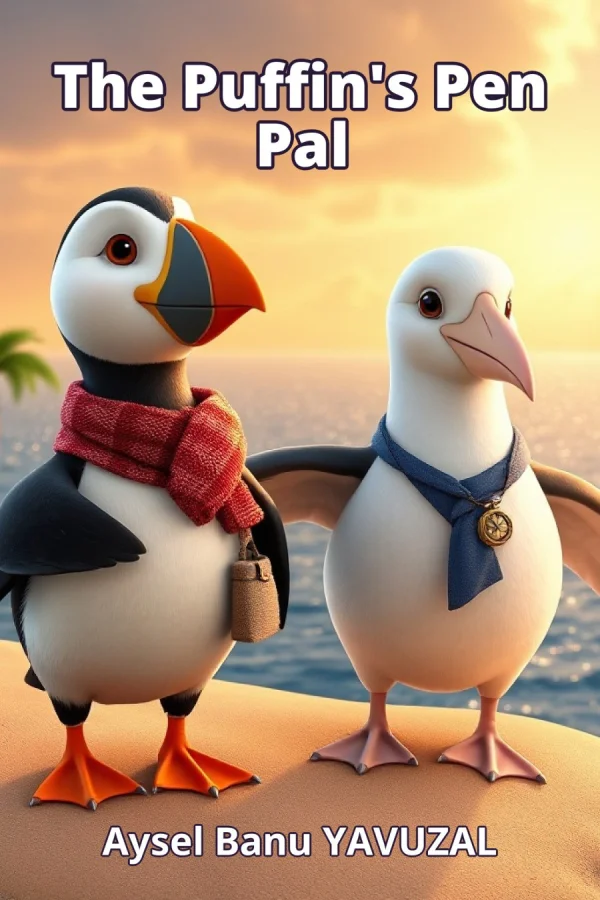
The boy spotted a small puffin waddling across the grass. It had black and white feathers, a bright orange beak, and round dark eyes. The puffin carried a blade of grass in its beak. "Hello, little puffin!" the boy whispered. The puffin tilted its head and waddled closer. The boy's eyes widened with delight. 3
"That's a puffin," said the ranger, kneeling beside him. "Puffins are seabirds. They dig burrows in the soft ground to build their nests." She pointed to a sandy mound. "They use their beaks and feet to dig. Then they lay one egg inside." The boy watched as the puffin disappeared into a hole. "So that's their nesting burrow," he said. 4
The ranger nodded. "Puffins return to the same burrow every year. They need safe places to raise their chicks." The boy learned that puffins eat small fish and spend most of their lives at sea. But in spring, they come to land to nest. "Their habitat must be protected," the ranger said. The boy wanted to learn more. 5
The boy followed the puffin as it waddled to a burrow. The puffin popped inside, then came out with a beak full of grass. It was busy making its nest cozy. The boy giggled. "You're a hard worker!" he said. The puffin blinked its round eyes and waddled off again. The boy loved watching the little seabird. 6
Suddenly, a group of visitors walked off the path. They stepped near the burrows, and the puffins got scared. Some puffed up and ran into their holes. "Please stay on the path!" the ranger called. "The nesting areas are fragile." The boy saw how the puffins needed quiet, safe places. He wanted to help. 7
The boy had an idea. "I could make signs!" he said. "Cheerful signs that tell people to stay on the paths and keep away from nesting areas." The ranger clapped her hands. "That's a wonderful idea!" she said. "We need more signs to protect the puffins." The boy opened his satchel and took out his pencils. 8
The boy sat on a bench and drew a big, bright sign. It showed a puffin with a speech bubble: "Please stay on the path!" He used yellow and green and blue. He drew a nest with an egg and wrote, "Keep away from burrows." His gap-toothed grin grew as he worked. Each sign was cheerful and clear. 9
The ranger brought wooden posts and helped the boy place the signs. They put them along the path where visitors could see. "These signs will remind everyone to be careful," the ranger said. The boy hammered a post with a mallet. The little puffin waddled by, as if to say thank you. The boy felt proud. 10
Soon, visitors read the signs and smiled. "What a good idea!" said a woman. "We'll stay on the path." The puffins came out of their burrows again. They waddled and dug and carried grass. The boy watched the little puffin busy at work. The ranger patted his shoulder. "You've made a real difference," she said. 11
The boy visited the reserve again in the summer. He saw the little puffin with a tiny chick! The chick had fluffy grey down and a tiny orange beak. "They raised a chick!" the boy cheered. The ranger explained that the signs helped keep the nesting areas safe. The puffin family was thriving. The boy's heart felt full. 12
The boy knew he had helped protect the seabirds and their home. He made more signs with his class. They painted puffins and chicks and wrote messages like "Quiet please—nesting area!" The ranger hung them around the reserve. Everyone loved the cheerful signs. The puffins nested in peace. The boy smiled, proud of his work. 13
On his last visit, the boy stood on the cliff and watched the puffins fly out to sea. Their orange beaks flashed in the sunlight. The little puffin waddled over and stood beside him. "You're safe here," the boy said. He felt happy knowing the reserve was a protected home. The puffin seemed to nod. 14
The ranger gave the boy a badge that said "Reserve Helper." He wore it proudly on his yellow raincoat. "Remember," she said, "seabirds need protected habitats. And you helped make that happen." The boy looked out at the sea and the cliffs. He knew he would always care for nature. His satchel still held pencils, ready for more signs. 15
As the sun set, the boy waved goodbye to the little puffin. "See you next spring!" he called. The puffin flapped its wings and waddled to its burrow. The boy walked home with a happy heart. He learned that even small hands can make a big difference. And the puffins would always have a safe place to nest.
This section is a preview taken from the book (about 939 words). To continue, read the book or download the PDF.
Book Details
- Book
- The Boy and the Little Puffin
- Author
- Aysel Banu YAVUZAL
- Category
- Children's Fairy Tales
- Language
- English
- Format
- PDF · 11.5 MB
- Pages
- 18
- Words
- about 940
- Published
- masalizle.com
- Access
- Free to read and download; for personal use only, all rights belong to the author.
Frequently Asked Questions
Is the PDF of The Boy and the Little Puffin free?
Yes. The Boy and the Little Puffin can be read and downloaded for free on this site; no sign-up or payment is required.
How many pages is The Boy and the Little Puffin?
The Boy and the Little Puffin has 18 pages and about 940 words.
Which devices can I read The Boy and the Little Puffin on?
It is a PDF; you can read it in your browser on a phone, tablet or computer, or download it and open it offline.
Who is the author of The Boy and the Little Puffin?
The Boy and the Little Puffin was written by Aysel Banu YAVUZAL; it is listed in the Children's Fairy Tales category.